SEO para marketing inmobiliario off-plan: keywords de arquitectura y estrategia de contenido para 2026
Un blueprint practico de SEO para equipos de arquitectura e inmobiliaria que venden proyectos off-plan, con clusters de keywords, estructura de contenido y flujos visuales con Gemini 3.1.
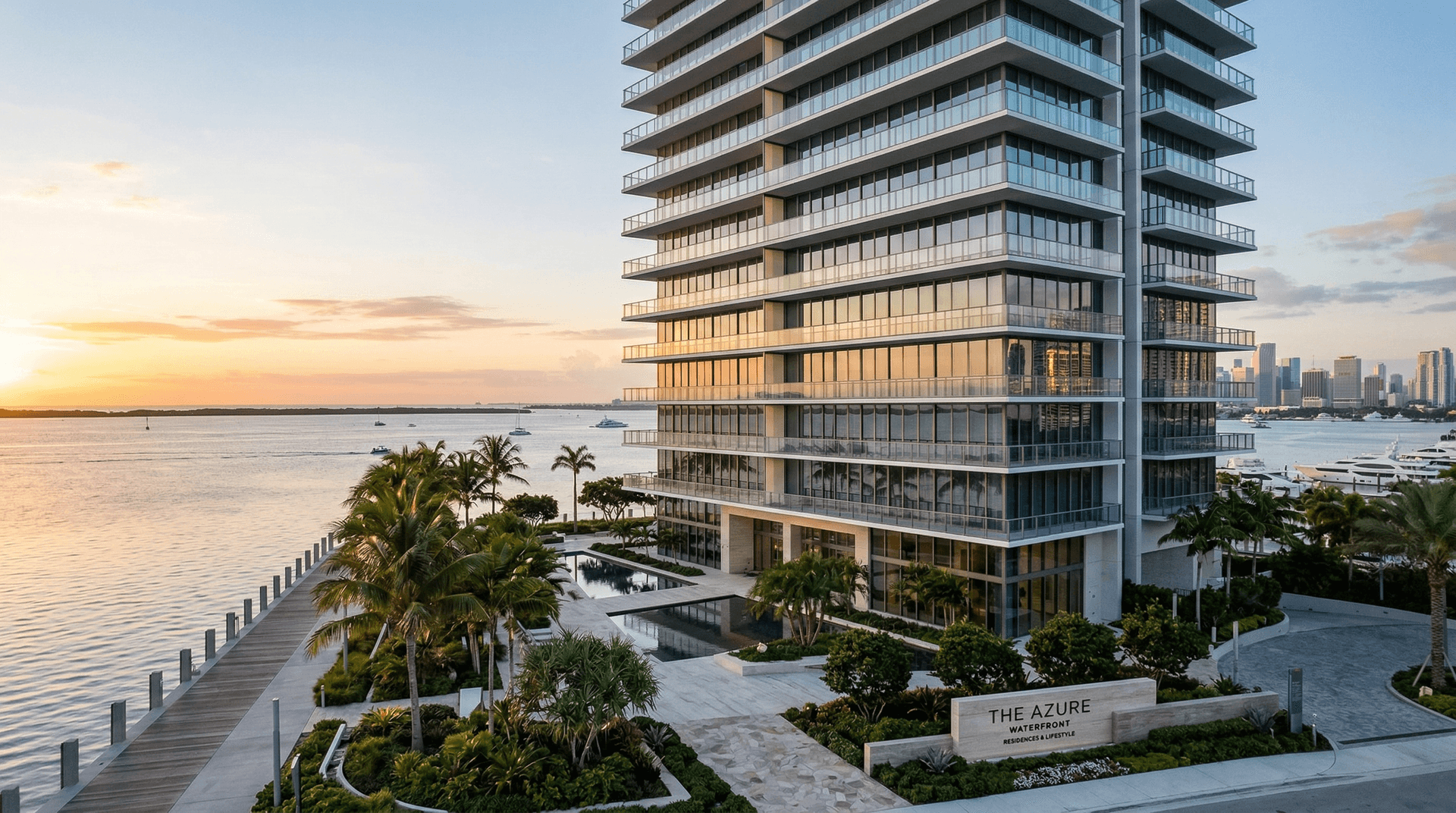
Vender vivienda off-plan no es lo mismo que promocionar inventario terminado. El comprador decide a partir de vision, senales de confianza y seguridad sobre la ubicacion antes de poder caminar por el producto final.
Eso cambia tu estrategia SEO. Necesitas visuales centrados en arquitectura, paginas de intencion local y contenido orientado a conversion que responda "Este proyecto es creible?" y "Esta ubicacion merece la pena?" en una sola sesion.
Esta guia esta pensada para promotoras, agencias y equipos internos de marketing que quieren consultas cualificadas desde busqueda organica.
Por que el SEO off-plan es distinto al SEO inmobiliario estandar
En SEO residencial tradicional, muchas busquedas de alta intencion apuntan a disponibilidad inmediata:
- "apartamentos en venta en [zona]"
- "villas listas para entrar"
- "condos listos para mudarse"
El SEO off-plan se mueve en otra capa de intencion:
- demanda de lanzamiento ("nuevos apartamentos en [ciudad]")
- investigacion de confianza ("[promotora] es fiable")
- busqueda de financiacion ("plan de pago off-plan [ciudad]")
- senales de valor futuro ("mejores proyectos off-plan para invertir")
En la practica, tus paginas que mas convierten suelen ser:
- landings de proyecto con narrativa arquitectonica solida
- paginas de barrio e infraestructura
- explicadores de planes de pago
- paginas transparentes sobre calendario, hitos y entrega
Clusters SEO para arquitectura e intencion off-plan
Los clusters de abajo combinan patrones habituales de SEO inmobiliario de fuentes como Semrush, Ahrefs y listas de keywords de mercado off-plan como Ranktracker. Las frases estan adaptadas a posicionamiento off-plan y arquitectonico.
| Cluster de keywords | Intencion de busqueda | Keywords de ejemplo | Mejor tipo de pagina |
|---|---|---|---|
| Transaccional off-plan | Comercial alta | propiedades off-plan en dubai, apartamentos off-plan [ciudad], comprar propiedad off-plan | Pagina principal de coleccion |
| Descubrimiento de lanzamiento | Comercial temprana | nuevos proyectos [ciudad], proximos proyectos inmobiliarios [ciudad], pre construction condos [ciudad] | Hub de nuevos lanzamientos |
| Confianza en promotora | Validacion mid-funnel | proyectos off-plan de [promotora], opiniones de [promotora], [promotora] es fiable | Perfil de promotora + pruebas |
| Ubicacion e infraestructura | Intencion local | mejores zonas para comprar off-plan en [ciudad], nuevo metro cerca de [comunidad], colegios cerca de [proyecto] | Guias de zona |
| Pagos y financiacion | Soporte de conversion | plan de pago off-plan [ciudad], propiedad con 1% mensual, post handover payment plan | Paginas explicativas de financiacion |
| Arquitectura y diseno | Diferenciacion | apartamentos de arquitectura moderna [ciudad], branded residences arquitectura, diseno sostenible inmobiliario | Paginas de historia arquitectonica |
| Resultados de inversion | ROI | inversion en propiedad off-plan [ciudad], rentabilidad alquiler [zona], apreciacion de capital [comunidad] | Paginas de analisis de inversion |
| Comparacion | Decision | off-plan vs listo para entrar, mejores proyectos off-plan [ciudad] 2026, proyecto A vs proyecto B | Paginas comparativas |
Si solo publicas paginas genericas de listings, pierdes gran parte de esta demanda. Los recorridos de busqueda off-plan son intensivos en investigacion, y la profundidad del contenido es lo que convierte.

Arquitectura de contenido que vende off-plan mas rapido
Usa una estructura de tres capas que siga el camino de decision del comprador.
Capa 1: paginas de captura de demanda
Objetivo: posicionar para keywords comerciales amplias.
/propiedades-off-plan-[ciudad]/nuevos-apartamentos-[ciudad]-2026/villas-off-plan-[ciudad]
Cada pagina deberia incluir:
- tarjetas de proyectos activos
- fragmentos de planes de pago
- filtros de estilo arquitectonico (contemporaneo, waterfront, branded, etc.)
- CTAs de consulta directa above the fold
Capa 2: paginas de confianza y prueba
Objetivo: reducir la incertidumbre del comprador.
- perfiles de promotora
- paginas de progreso de obra
- calendario de entrega e hitos
- FAQs sobre escrow, entrega y service charges
Incluye prueba estructurada:
- fechas de obra e imagenes de hitos
- referencias regulatorias o permisos cuando aplique
- afirmaciones de proximidad basadas en mapa (colegios, transporte, hospitales)
Capa 3: activos de conversion
Objetivo: convertir trafico SEO en consultas cualificadas.
- brochures descargables
- desglose de planos y unidades
- tour virtual o galeria cinematica de renders
- modulos para solicitar llamada y WhatsApp
El mayor error en marketing off-plan es tratar el SEO como un canal solo de blog. Tus paginas principales de conversion tambien deben ser paginas SEO.
Estrategia visual basada en arquitectura para busqueda y conversion
El comprador off-plan valida la calidad de diseno antes de la entrega. Tus visuales no son decoracion: son activos de confianza.
Prioriza estas categorias de imagen:
- Renders hero de arquitectura exterior
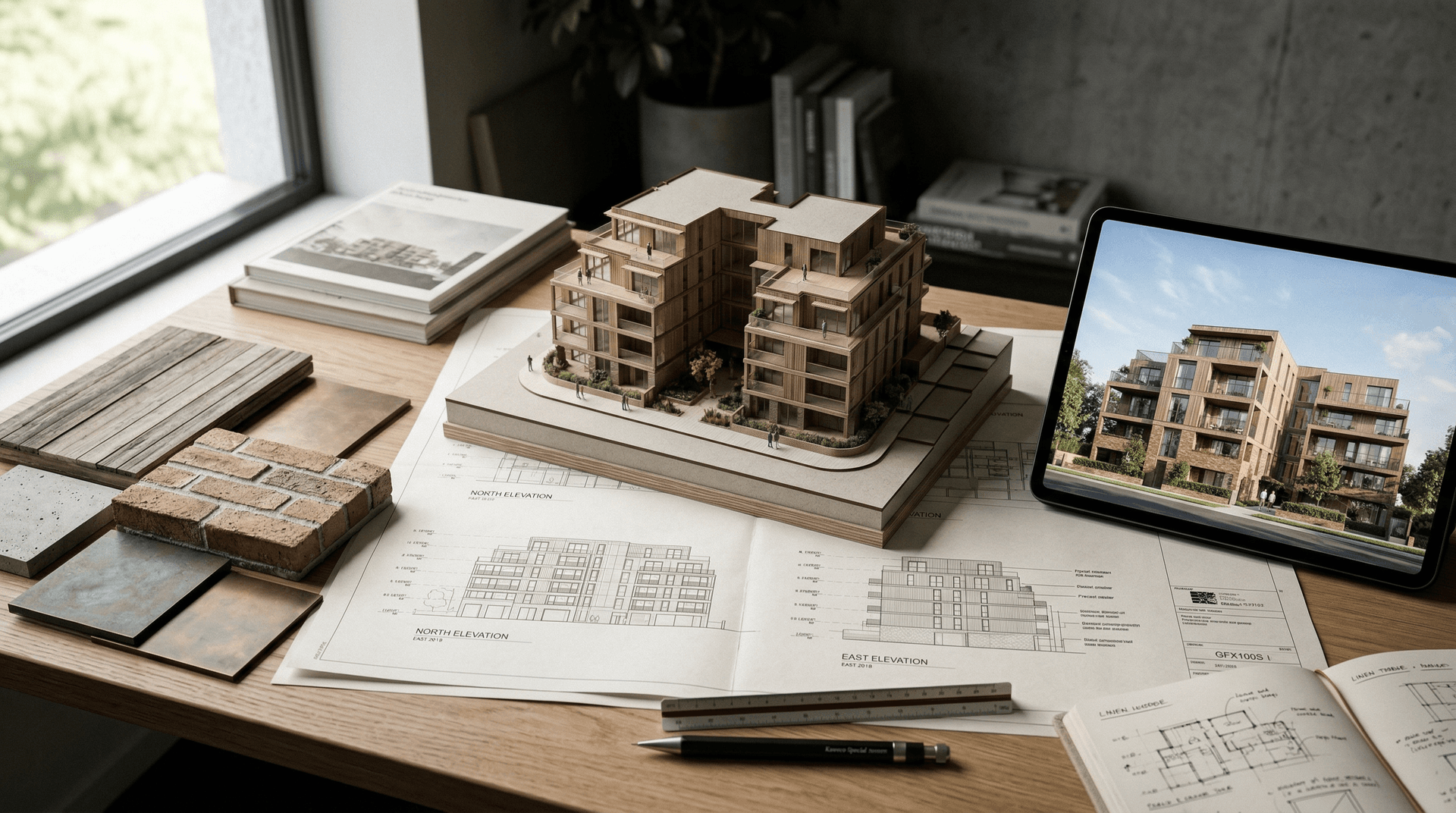
- Tomas de materiales y detalles
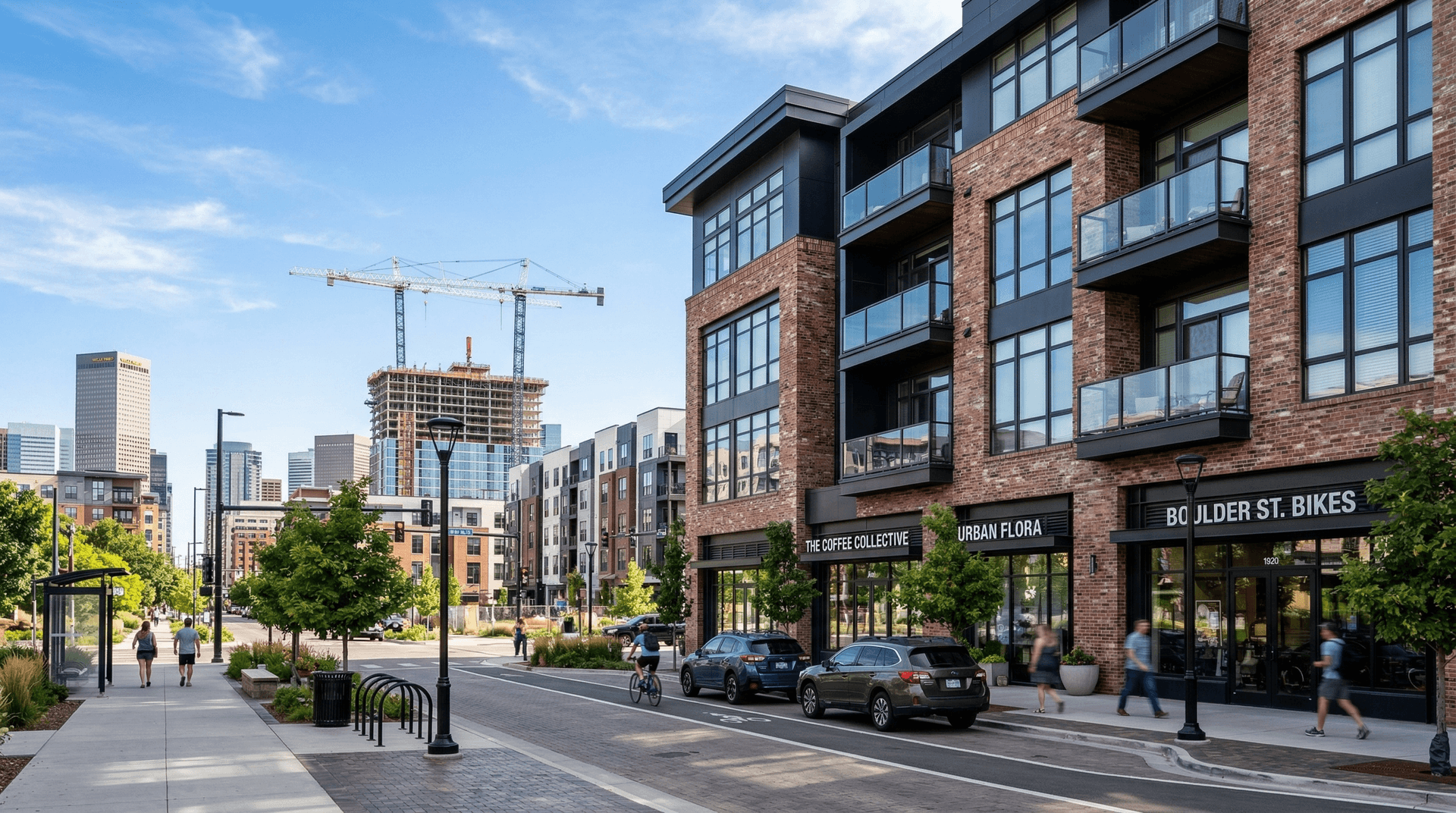
- Visuales de contexto de barrio
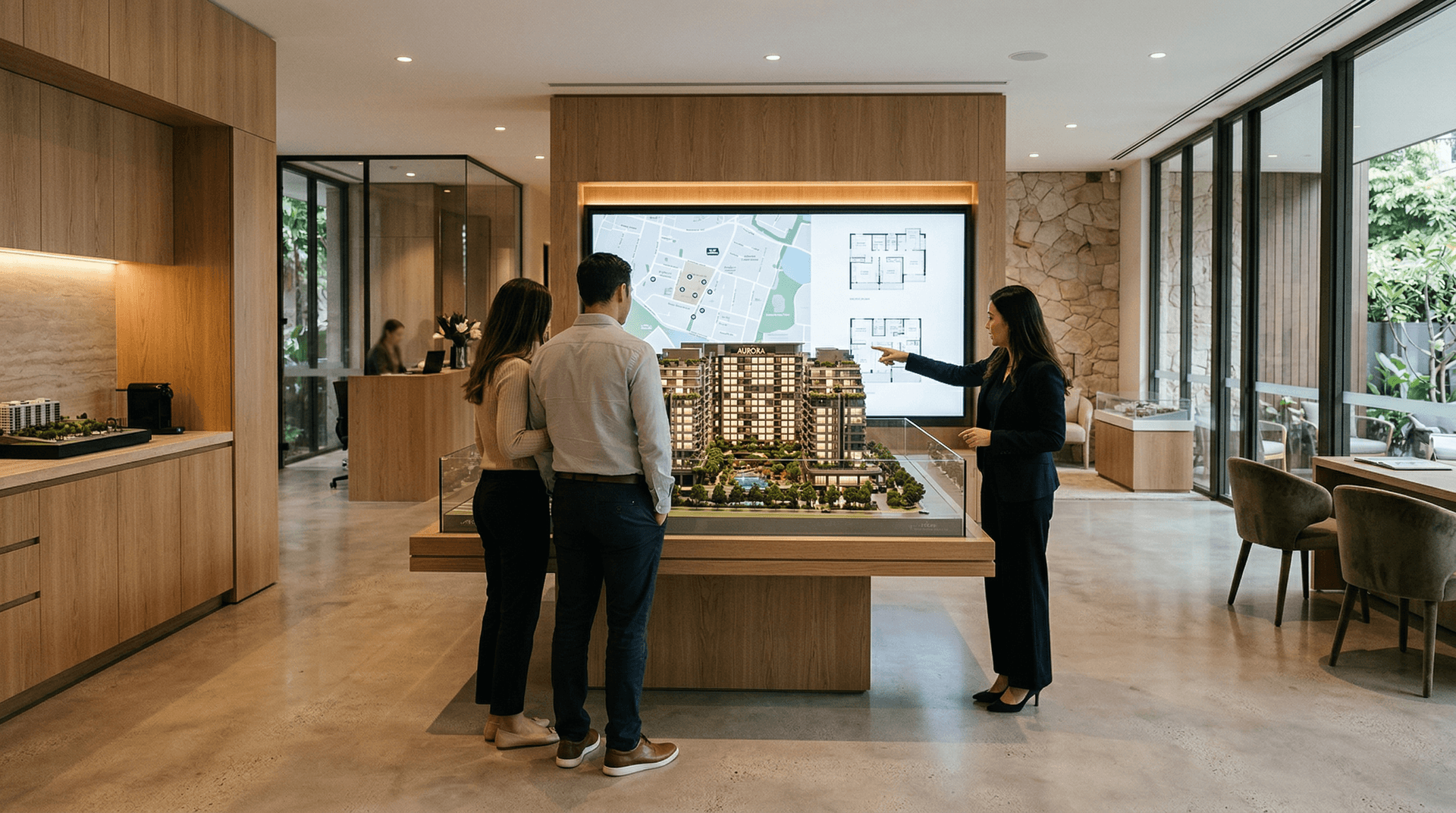
- Imagenes de showroom o proceso de venta
- Visuales narrativos de planos y distribucion
Para SEO de imagen, optimiza cada activo con:
- nombres de archivo descriptivos (
torre-waterfront-off-plan-vista-noche.png) - alt text con ubicacion e intencion
- captions contextuales bajo cada figura
- formatos comprimidos y rapidos para web
Flujo Gemini 3.1 para visuales de blog y landing
Para producir rapido, genera un set reutilizable de imagenes con Gemini 3.1 y guardalo primero en local. Despues puedes mover esos mismos activos a un bucket de Supabase sin cambiar la estructura del articulo.
En este proyecto, la generacion de imagenes esta scriptada en:
scripts/generate-off-plan-blog-images.ts
Carpeta de salida:
public/blog/off-plan-real-estate-marketing/
Ejecutalo con:
npx tsx scripts/generate-off-plan-blog-images.ts
El script genera:
- assets PNG especificos por seccion
prompts.jsoncon prompts reutilizables, alt text y captions- encuadre 16:9 consistente para reutilizar en blog y landing
Esto crea un flujo repetible de "contenido + pack visual":
- Define el cluster de keywords.
- Genera prompts por seccion segun la intencion.
- Produce el pack visual en Gemini 3.1.
- Publica el MDX con rutas locales.
- Mueve los assets a Supabase cuando el bucket este listo.
Plan de ejecucion de 30 dias para un sprint SEO off-plan
Semana 1:
- cerrar el mapa de keywords por ciudad y tipo de proyecto
- lanzar una pagina hub off-plan de alta intencion
- publicar una pagina de diferenciacion arquitectonica
Semana 2:
- lanzar tres paginas de ubicacion, una por comunidad clave
- anadir una pagina explicativa del plan de pago
- publicar contenido fresco sobre calendario de obra
Semana 3:
- anadir paginas comparativas ("off-plan vs listo para entrar", "proyecto A vs proyecto B")
- generar y desplegar nuevo pack visual para paginas clave
- mejorar enlaces internos desde blog hacia paginas de consulta
Semana 4:
- actualizar metadata y copy on-page segun consultas de Search Console
- refrescar la pagina mas debil con mejores visuales y CTAs mas claros
- publicar una pagina de inversion centrada en ROI
Mide estos KPIs semanalmente:
- impresiones y clics de terminos transaccionales off-plan
- consultas organicas enviadas
- ratio de clic en llamada y WhatsApp
- mezcla de busquedas branded y non-branded
Idea final
Si tu objetivo es vender inventario off-plan, tu sistema SEO deberia parecerse a un sistema de ventas, no a un calendario editorial.
Construye clusters alrededor de intencion real de comprador, estructura paginas para confianza y conversion, y usa visuales de arquitectura generados a escala con Gemini 3.1. Esa combinacion convierte trafico en leads cualificados.